You can have a loving partner, care about each other, and a relationship that looks “fine” from the outside – and still feel miles away from your own desire, see sex as a chore and maybe even avoid it altogether.
If you’re a woman over 40, you may not even be sure what you’re searching for when you type sex therapy Auckland into Google. Relief, perhaps. Or a way to stop bracing during intimacy. Or simply a place where you can tell the truth without feeling judged, broken or “too much”.
You search because you know a lack of sex can break your relationship. And of course you don’t want to push yourself into ‘doing it’ for your partner’s sake.
You want to want. You want to feel desire. You want to feel loved and desired.
Sex therapy can be that place. Not because someone gives you a script for what to do in bed, but because it helps you come home to your body, your voice, and the kind of connection that actually nourishes you.
What sex therapy in Auckland can help with (and what it can’t)
Sex therapy is a specialised form of talking therapy focused on sexuality and intimacy, often drawing on relationship therapy as well. In Auckland you’ll find clinicians with different backgrounds: psychologists, psychotherapists, counsellors, and sometimes medical practitioners with additional training.
I integrate sex therapy with Emotionally Focused Therapy for couples (EFT) and Eastern tantric approaches. Plus I’m trained in trauma therapy, which I find is essential for anyone working with sexuality.
Women tend to seek sex therapy for a handful of tender, common reasons: desire that has dimmed, painful sex, difficulty reaching orgasm, shame or anxiety, mismatch in libido with a partner, or the aftershocks of betrayal, childbirth, menopause, illness, or past experiences that still live in the body.
What it can’t do is magically turn you into someone else. And it won’t override your nervous system’s need for safety. If your body has learnt that intimacy equals pressure, performance, discomfort, or emotional risk, you can’t “mindset” your way into relaxed pleasure. The work is gentler and deeper than that.
It also depends on context. If your relationship is currently unsafe, coercive, or emotionally harmful, “better sex” is not the first goal. Safety, boundaries, and support come first. A skilled therapist will name that plainly and compassionately.
That’s where my training in the Emotionally Focused Therapy for couples (EFT) comes very handy. Sex is intimacy, intimacy requires an emotional connection. If it’s not there, I’ll help you rebuild it. Then sex becomes a beautiful love language that you share with your partner.
What happens in a sex therapy session?
Most women worry the first session will be explicit, embarrassing, or invasive. In reality, sessions are usually calm, conversational, and paced around your comfort.
Your therapist will ask about what’s bringing you in, what you want to be different, and what you’ve already tried. They may ask about your relationship history, stress load, hormones/menopause, health conditions, medications, body image, and any experiences that shaped your sense of sexuality – including the subtle ones, like growing up with silence, criticism, or the sense that “good girls don’t”.
You do not have to share details you’re not ready to share. A trauma-informed therapist will work with your consent at every step.
Sometimes sessions are individual. Sometimes couples attend together. And often there’s a blend – because your intimate life is both personal and relational.
Practical tools may include communication skills, guided reflection, sensate focus (a structured, non-demand touch practice), anxiety reduction, and ways to rebuild trust. Deeper work may include healing shame, resolving resentment, grieving losses, and learning to feel safe in your body again.
Why desire changes – especially after 40
For many women, “low desire” isn’t really low desire. It’s protected desire.
If your days are full – work, family, caring responsibilities, mental load, and the endless background buzz of being needed – your nervous system may not drop into the receptive state where desire can even arise. Add perimenopause or menopause and the equation changes again: vaginal dryness, changes in arousal, sleep disruption, mood shifts, and a body that feels unfamiliar.
Then there’s the relational layer. Desire struggles often sit beside:
- unspoken hurt
- feeling emotionally alone in the partnership
- resentment about unequal labour
- fear of disappointing your partner
- pressure to perform rather than be present
Sex therapy treats desire as meaningful information, not a defect.
The difference between “sex tips” and real change
You can read all the articles, buy the toys, and learn new techniques – and still feel numb, tense, or disconnected.
That’s because sexuality isn’t just an act. It’s a state. Your body needs cues of safety, choice, and emotional attunement to soften. Real change usually involves two threads woven together.
First: psychological and relational repair. The capacity to name what you feel, ask for what you need, set boundaries without guilt, and address the hurts that quietly close your heart.
Second: body-based learning. Many women have spent decades living from the neck up – competent, capable, admired – while their pelvic bowl holds tension, grief, and unfelt longing. Gentle somatic practices help you shift from performing to sensing.
In skilled hands, these two threads meet: your emotions are honoured, your body is included, and your sexuality becomes something you inhabit rather than “do”.
Choosing the right sex therapist in Auckland
Chemistry and safety matter as much as qualifications. You’re allowed to be discerning.
Look for someone who is clear about consent, pacing, and confidentiality. Notice how their website or first call makes you feel. Do you feel pressured, judged, or hurried – or do you feel met?
It can help to ask directly about their approach. Many women benefit from a blend of evidence-informed therapy (such as Emotionally Focused Therapy for couples) plus embodiment practices that don’t pathologise female sexuality.
A few grounded questions to ask are: What training do you have specifically in sex therapy? How do you work with trauma, menopause or pain? Do you give structured practices between sessions? How do you support couples where one partner feels rejected and the other feels pressured?
If you’re partnered, it also depends whether your partner is willing to engage. Couples therapy can be powerful – but individual work can still shift the entire dynamic, because you change how you show up, what you tolerate, and what you invite.
When pain is part of the picture
Painful sex is more common than most women realise – and it’s not something to push through.
Sometimes pain is medical (for example, hormonal changes leading to dryness and tissue sensitivity, vulval skin conditions, or pelvic floor issues). Sometimes it’s a nervous system response: your body bracing because it expects discomfort, pressure, or disconnection. Often it’s both.
A good sex therapist will encourage collaboration with appropriate medical and pelvic health professionals when needed, while also helping you work with the fear-pain cycle. The aim is not to “get through sex”. The aim is to create intimacy that feels safe, kind, and genuinely pleasurable – which might initially mean redefining intimacy beyond penetration.
There is no gold medal for endurance. Your body deserves tenderness.
If your relationship has lost its spark
Long-term love is beautiful – and it can also become practical, predictable, and parent-like. When the erotic fades, many couples assume something is wrong with them. More often, something is missing.
Eros thrives on presence, polarity, playfulness, and feeling chosen. If every touch is either a demand or a duty, your body will learn to shut down.
Sex therapy helps couples slow down and get honest about the patterns that keep them stuck: avoidance, criticism, silent resentment, defensive humour, or the painful loop of one partner pursuing and the other withdrawing.
With Emotionally Focused Therapy, for example, the focus is not on blame. It’s on the attachment needs underneath the pattern – the longing to matter, to be desired, to feel safe enough to soften. When that layer shifts, intimacy often follows.
A gentle practice to try this week
Set aside five minutes. Sit somewhere warm and quiet. Place one hand on your heart and one on your lower belly. Breathe slowly and ask yourself: “If my body could speak honestly, what would it want me to know about intimacy right now?”
Then listen. Not for the perfect answer – for the truest sensation. You might notice sadness, tightness, longing, anger, fatigue, or a tiny spark of curiosity. Let it be there without fixing it.
This is how confidence returns – not through forcing, but through creating a loving relationship with yourself and your body.
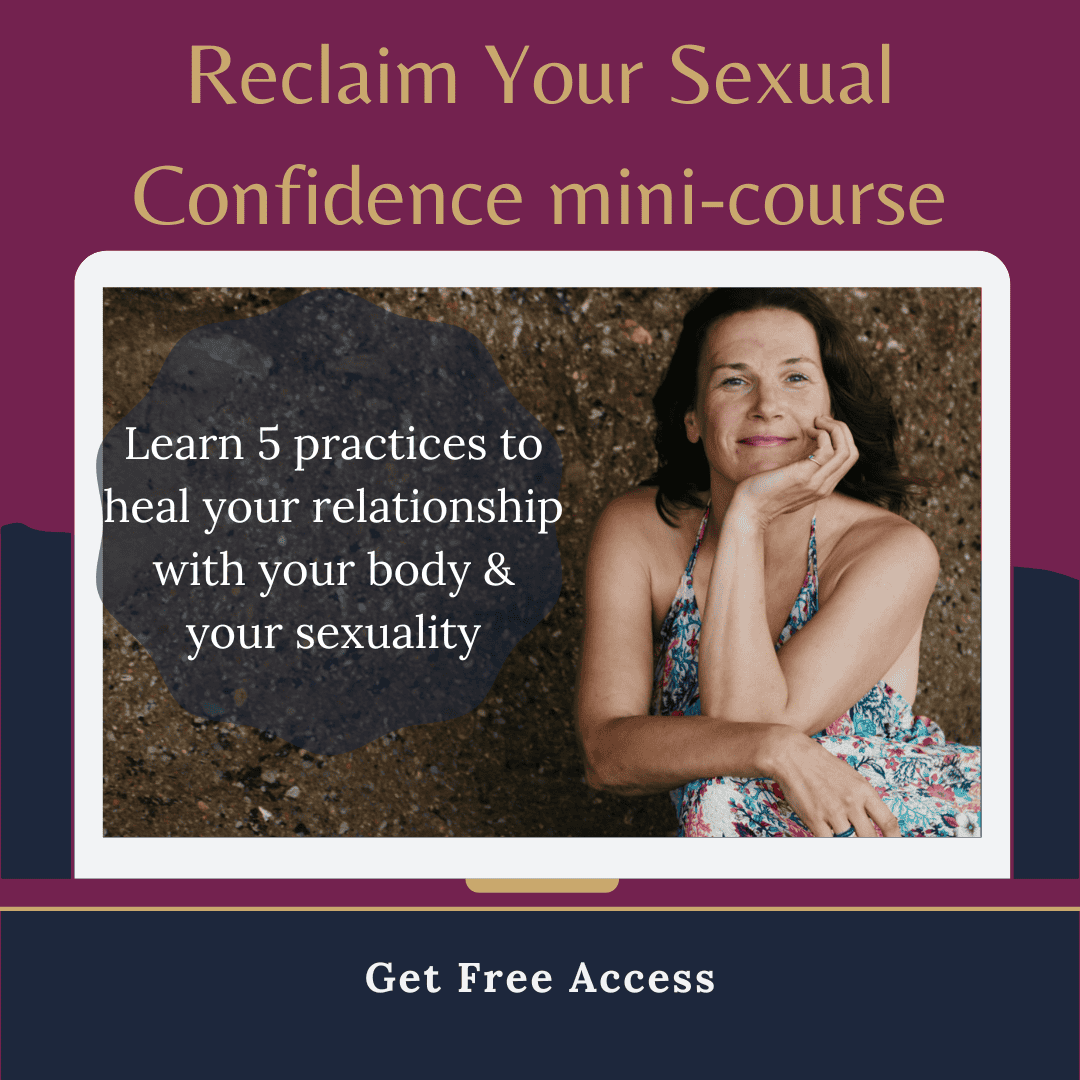
Here’s my free Reclaim Your Sexual Confidence course with more practices to support you.
Click here to access the free course
Finding support that fits you
If you want a pathway that blends therapeutic depth with a reverence for feminine sexuality, there are practices that integrate modern psychotherapy with sacred, body-led approaches. In Auckland and online, you’ll find options ranging from clinical sex therapy to more holistic relationship work.
If it feels aligned, I offer (https://www.sexualempowermentforwomen.com) education, workshops, and therapy for women and couples, with a trauma-informed blend of sex therapy, Emotionally Focused Therapy, and gentle embodied practices.
Whatever you choose, the right support should leave you feeling more you – more resourced, more spacious, more honest – not scrutinised or pushed.
A closing thought
You don’t need to wait until things are “bad enough” to ask for help. Your pleasure, your boundaries, your softness, your desire – they are not luxuries at the bottom of the list. They are part of what makes you feel alive. And you are allowed to build an intimate life that your heart can stay open inside.
And the truth is, most couples wait way too long before asking for support. It’s like coming 7 years after you broke your arm. Of course, we can help, but the earlier you come, the more effective I can be and the more joy and love you’ll experience.
Book time for a free chat here, no pressure, only lots of support.
Tarisha Tourok Sex Therapy Auckland (online and in-person)
Emotionally Focused Therapy for couples (EFT) Auckland www.deeplyinloveagain.com