If your body tenses when you want to relax… if you go numb right when you long to feel… if you find yourself saying yes when your whole system is whispering no – you are not failing at sex.
Your nervous system is doing its best to protect you.
Many women I work with are brilliant, competent, deeply loving partners.
They can lead meetings, raise children, run households, care for ageing parents.
Yet in the bedroom, they feel confusion, dread, pressure, or emptiness.
Sometimes it’s pain. Sometimes it’s a disappearing libido. Sometimes it’s a sense of being “present” for their partner while feeling far away from themselves.
This is exactly where trauma-informed sex therapy for women can become life-changing – not by pushing you to perform, but by rebuilding safety, choice, and pleasure from the inside out.
What “trauma-informed” actually means in sex therapy
Trauma-informed care is more than a kind tone or asking about your history. It is a framework that assumes your symptoms make sense in context. It centres emotional and physical safety. It honours your pace. It offers you real choice, not polite pressure.
In sex therapy, this matters because intimacy is not only physical.
It is sensory, emotional, relational, and often deeply symbolic. Your body keeps score of what was safe, what was tolerated, and what was endured.
Trauma can include obvious events such as sexual assault or coercion, but it also includes the quieter experiences that shape a woman’s relationship with her body – repeated boundary crossings, painful sex that was minimised, humiliating comments, medical trauma, betrayal, religious shame, being “the good girl” who learnt to disconnect.
A trauma-informed approach will not treat low desire or difficulty with arousal as a problem to fix.
It will treat it as communication. Your body may be saying: slow down, I need to trust you again.
Why desire disappears after hurt, stress or menopause
For many women over 40, desire changes are layered. There may be perimenopause or menopause shifts: dryness, sensitivity, changes in sleep, mood swings, body image changes, and a quieter baseline of spontaneous desire. There may also be years of “getting on with it” sex that didn’t feel fully chosen.
Add relationship strain, resentments, emotional disconnection, or a partner who takes your “no” personally, and the nervous system learns that sex equals pressure.
Even if you love your partner.
Trauma doesn’t always look like flashbacks. Sometimes it looks like:
- bracing, tightening, or holding your breath during intimacy
- fawning (saying yes to keep the peace)
- dissociation (going blank, numb, or floating away)
- hypervigilance (worrying about how you look, smell, sound)
- shutting down desire because it feels safer to want nothing
A trauma-informed therapist helps you read these signals with compassion, so your body stops needing to shout.
What happens in trauma informed sex therapy for women
The first “intervention” is often relief: someone finally believes you. Not as a story to analyse, but as a lived reality in your tissues, your heart, your marriage.
Then the work becomes a gentle reorganisation of safety.
1) Safety becomes more important than performance
Many women have learnt sex is something you do well, or you do for someone. Trauma-informed work turns that around: sex becomes something you experience, with your body in the lead.
This may mean slowing right down and mapping what helps you feel safe. It can be practical: lighting, privacy, time of day, lubrication, a clear agreement that you can stop at any moment without sulking or consequences. It can be emotional: feeling genuinely met, not managed.
2) Consent becomes a living practice, not a one-time question
Consent is not just “yes” or “no”. In long-term relationships, consent can get blurry because habits take over. A trauma-informed approach helps you build consent as an ongoing conversation with your body.
You learn to notice the difference between:
- “I’m willing” (a calm yes)
- “I’m enduring” (a tense yes)
- “I’m afraid to disappoint” (a fawn yes)
Your body’s truth matters. Not to create drama, but to create integrity.
3) The nervous system becomes the focus
If you have ever thought, Why can’t I just relax?, it may help to hear this: relaxation is not a decision. It is a state the nervous system enters when it perceives safety.
Trauma-informed sex therapy often includes body-based practices to widen your window of tolerance – your capacity to feel sensation without tipping into panic or numbness. This can be as simple as orienting to the room, grounding through your feet, breathing in a way that does not force calm, and learning micro-choices like “pause”, “change”, “slower”, “hand here not there”.
When the nervous system settles, desire has somewhere to land.
4) Emotional connection becomes part of the treatment
For partnered women, the relationship itself is often the healing site.
If your partner is kind but clueless (happens, right?), therapy can help you both create a new intimacy culture: one where your feelings are not an inconvenience and your boundaries do not get punished.
Emotionally Focused Therapy principles fit beautifully here. When a woman feels emotionally safe, seen, and cherished, her body is more likely to open. When she feels criticised, rushed, or responsible for her partner’s self-esteem, her body often closes.
What therapy might look like week to week
This depends on your history, your symptoms, and whether you attend alone or as a couple. A skilled therapist will collaborate with you rather than prescribe a rigid plan.
Early sessions might focus on stabilisation: understanding triggers, building grounding tools, and creating agreements around sexual contact so you are not re-traumatised at home.
Later, you may explore the beliefs and stories that live underneath the symptom – shame, religious conditioning, “I’m too old”, “my body is disgusting”, “good wives don’t say no”, “if I need time, I’m broken”. These beliefs are not just thoughts. They are often inherited, learned, and reinforced through years.
Some therapy includes sensate focus style practices (structured touch exercises) done at home, with very clear rules that prioritise safety and sensation over performance. For trauma survivors, these must be paced carefully. It depends on whether touch feels grounding or triggering for you.
If pain is present, a therapist may also collaborate with pelvic health professionals. Trauma-informed does not mean therapy replaces medical care. It means your care is coordinated and respectful.
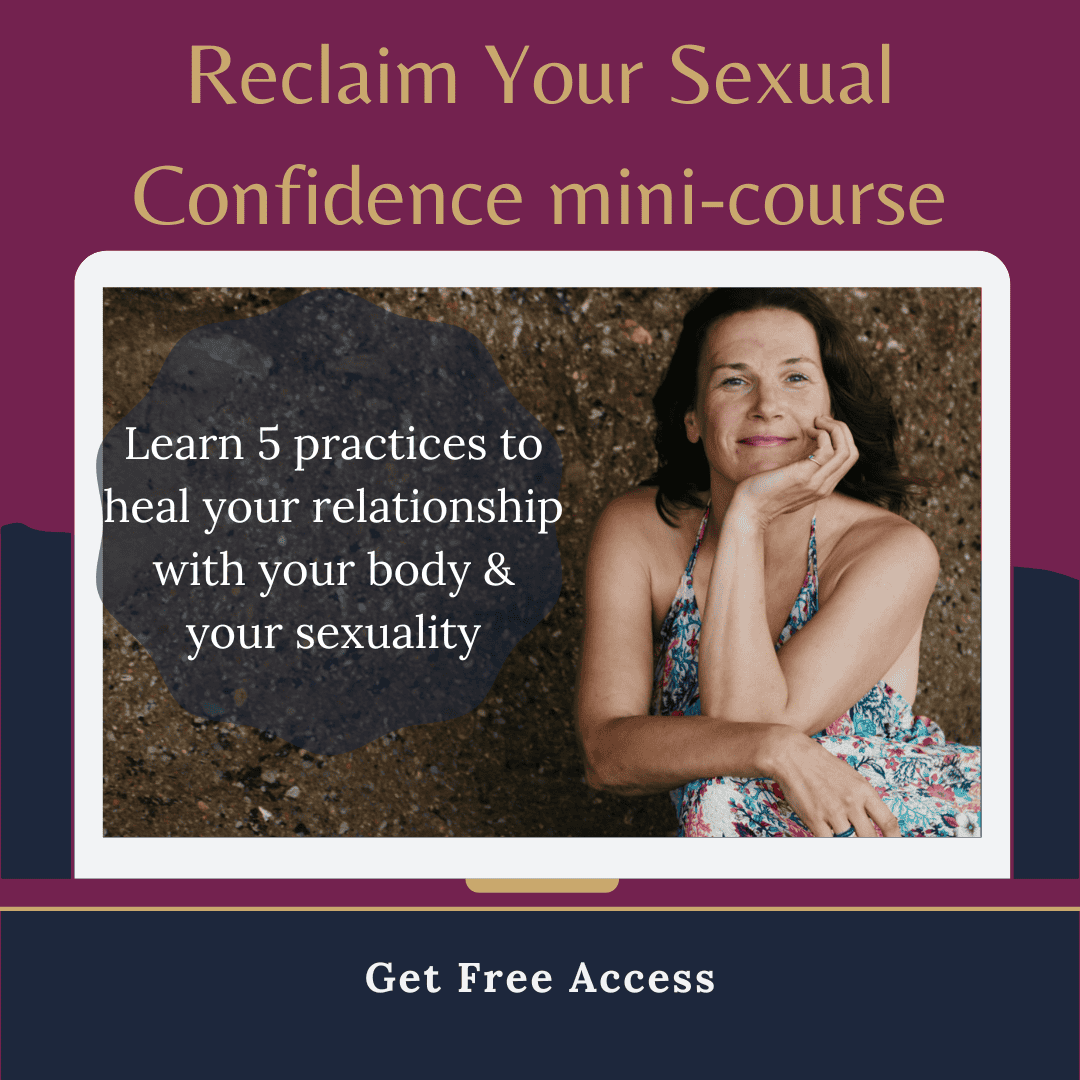
I find that healing in a safe group environment is most effective. That’s why I offer the Sexually Empowered Radiant Woman online group course. We heal much faster when we have other women on the same path.
How to know if a sex therapist is truly trauma-informed
Not every therapist who uses the phrase practises it well. You deserve to screen for safety.
Notice how you feel in the consultation. Do you feel rushed? Do you feel believed? Are they curious in a respectful way, or do they push for details before trust is built?
You can ask direct questions.
For example: How do you work with dissociation or freeze responses? What happens if I get overwhelmed in session? How do you handle consent and pacing? Do you have experience with peri/menopause-related changes and long-term relationships?
A trauma-informed therapist will welcome these questions. They will not shame you for being cautious. They will treat your caution as wisdom.
Common fears women bring, and what I want you to know
Many women secretly worry that therapy will make things worse, that talking about sex will be humiliating, or that their therapist will side with their partner.
Here is the truth: good trauma-informed sex therapy for women does not force disclosure, does not pressure you into touch-based exercises you are not ready for, and does not frame your partner’s sexual “needs” as more important than your safety.
It also does not keep you stuck in gentle validation forever.
This is where accountability matters. Healing includes learning to speak clearly, set boundaries, and follow through. It includes telling the truth even when you shake. It includes letting go of scripts that keep you small.
You are not broken. But you may need a new way of relating to your body – one that is devotional, grounded, and real.
Bringing sacred sexuality into trauma healing, without bypassing
Some women feel called to a more spiritual, heart-led connection. Others feel wary because spirituality has been used to dismiss pain: “Just open your heart” or “Just forgive.” Trauma-informed sacred sexuality is the opposite of bypassing.
It honours that the body is wise. It uses practices that invite presence rather than demand it. That might include breath, sound, movement, eye-gazing, or hand-on-heart connection – only when your nervous system says yes.
The purpose is not to be a “better lover”. The purpose is to come home to yourself, so intimacy becomes something you receive as well as give.
If you’re looking for an approach that blends evidence-based therapy with body-led, sacred sexuality practices in a safe, compassionate container, you may feel supported exploring the offerings at Sexual Empowerment For Women.
A small practice to begin today
Place one hand on your heart and one hand on your lower belly. Let your attention move between the two, as if you’re introducing them. Without forcing anything, ask: What would help me feel 5 per cent safer in intimacy?
Listen for a simple answer. It might be “more time”, “no goal”, “lights off”, “lube”, “a cuddle first”, “I need to hear I’m not disappointing you”, “I want to stop pretending.”
That one answer is not a demand. It is a doorway.
The closing thought I want to leave you with is this: your pleasure is not a performance metric, and your healing is not a race.
When you choose safety, truth, and tenderness with steady accountability, your body often remembers how to feel alive – not as a return to who you were, but as the radiant woman you are becoming.