If you love your partner but feel more like roommates than lovers, you’re not broken and your relationship isn’t over. Most long-term couples drift into the same pattern, and most of them wait far too long to do something about it.
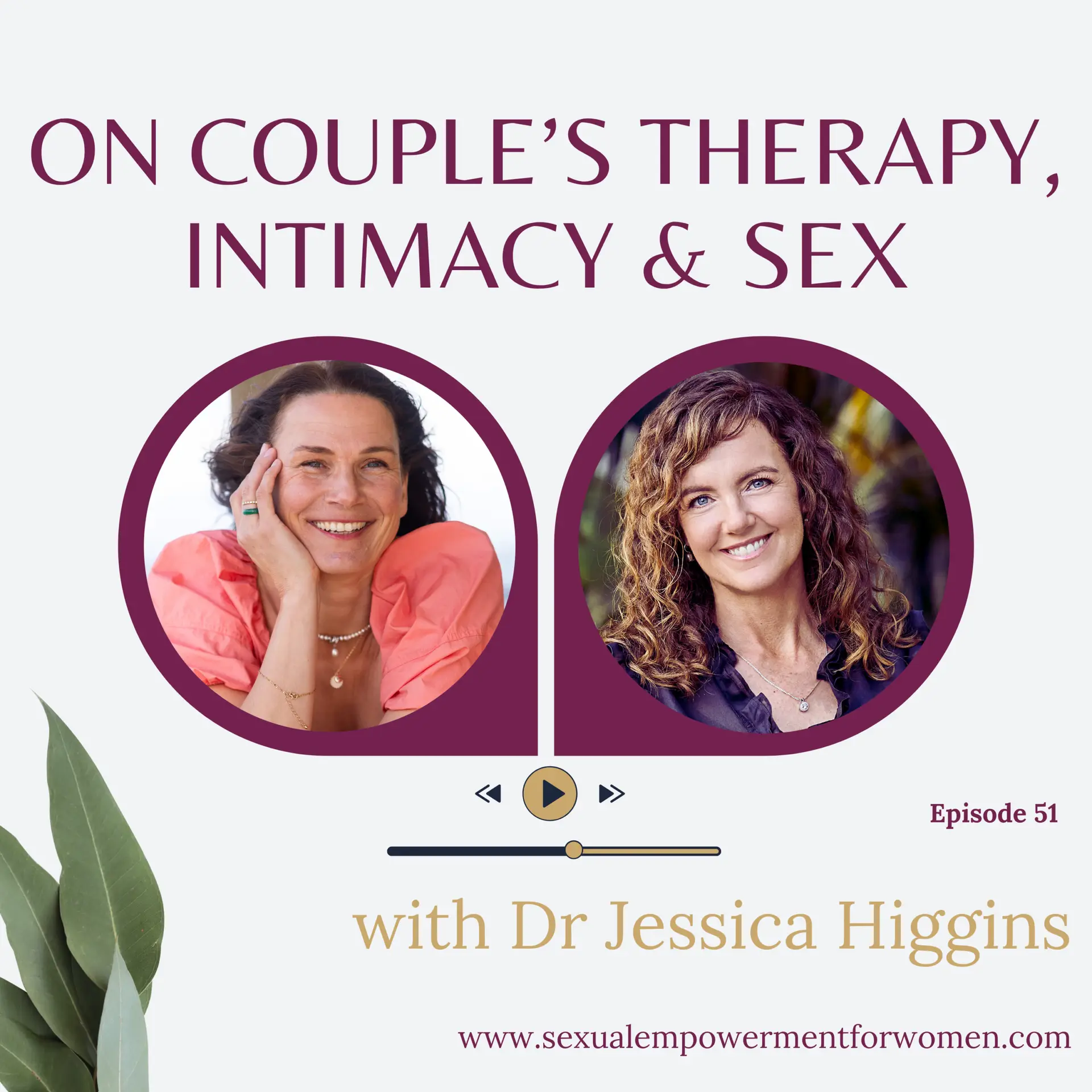
In this episode of the Sexual Empowerment for Women podcast I talk with Dr Jessica Higgins, psychologist, couples therapist and host of the Empowered Relationship podcast. We explore why feeling disconnected from your partner is so common after years together, the cycle that keeps couples stuck, and why sex drive after 40 has far less to do with trying harder and far more to do with coming back into your body.
Prefer to listen? The audio version is right here.
Listen and Subscribe
Press play above, or listen wherever you keep your podcasts. Subscribing is the thing that helps other women find this work.
Why Couples Wait Seven Years to Ask for Help
Jessica shares an analogy I love. Couples usually come for support around seven years after they first noticed the pattern. It’s like walking into a doctor’s office and saying, I broke my arm seven years ago, can you help me? Yes, they can help, but if you’d come sooner it would have been so much easier.
Part of the delay is shame. So many couples still believe that going to therapy means you’re failing, or that you’re one step from breaking up. Jessica sees it the other way around: therapy is a sign you’re learning. Having a skilled third person in the room helps your nervous system stay with the hard stuff long enough to change it. If you’re curious what that support can look like, read is therapy helpful for intimacy anxiety.
The Pursuer and Withdrawer Cycle Behind the Roommate Feeling
Underneath most roommate relationships there’s a dance. One partner pursues. They reach for contact, and when that doesn’t land they turn up the volume with criticism or complaint. What they’re really asking is, Are you there? Will you respond to me? Do you care?
The other partner hears that they’re failing, that they’re not enough. So they withdraw, because saying nothing feels safer than making it worse. To the pursuer, that silence looks like not caring. Round and round it goes, and the emotional intimacy drains out of the relationship.
The good news is that a cycle is learned, so it can be unlearned. Jessica calls it learning a new language together. You can start with these relationship repair exercises for couples.
Why Desire Doesn’t Switch On Like a Light
So many women tell me, my partner doesn’t turn me on anymore. Jessica’s answer is honest: if we’re stressed, depleted and running the to-do list all day, it’s very hard to turn on interest like a light switch. During perimenopause and menopause that depletion can hit even harder.
She shares how it works in her own marriage. If there’s a sex date and she rushes straight into it, she doesn’t even know where her body is at. When she gives herself time to be first, with no TV, no devices and no task to finish, she starts to feel her body, her breath and what feels good. Then she feels interested in her partner. Moving her hips to one song before intimacy makes, in her words, a night and day difference.
If lost interest in sex sounds like you, this is the place to start, and you’ll find more in midlife libido recovery for women over 40.
Your Sex Life Is a Mirror of Your Relationship
Jessica believes what happens in the bedroom reflects what’s happening everywhere else. If you do the same thing every time because you know it kind of works, it’s like a script. Chances are there are other places where you’re in routine, or where you’re afraid to say what you need.
It takes courage to say, this feels good, or, I want to try something new, without it coming out as criticism. That’s the bridge between the emotional and the sexual cycle. If asking feels exposing, read how to ask for affection without feeling needy.
Emotional Safety Needs a Little Risk Too
In couples work we often focus on emotional vulnerability, on being there for each other’s inner child. It matters. But if that’s all there is, it doesn’t have the juice, it doesn’t have the zing. Desire needs more of you in the room.
Jessica describes this as holding on to yourself. It sounds like, I’m curious about something we’ve never tried and I’m scared it’s outside your comfort zone, or, I want to slow down and breathe with you, would you have the patience for that? Each of those is a small emotional risk, and that risk is where aliveness lives.
Try the Wheel of Consent Together
Jessica recommends Betty Martin’s Wheel of Consent, an exercise that helps couples get clear on giving and receiving. You set a timer and take turns. For three minutes you touch your partner in a way that gives you pleasure, then they do the same. Then each of you asks for exactly the touch you want to receive.
It sounds simple, and it can be surprisingly hard if you’re used to pleasing. The first time Jessica tried it, she asked her husband to hold his hands a couple of inches above her skin and send love without touching her. She started to cry because it felt so nurturing. She had no idea she wanted that until she asked. For another way in, try these sensate focus exercises.
Where to Start This Week
- Breathe more deeply and notice one moment of pleasure today, a tree, the sky, your feet on the floor, a warm drink
- Give yourself time to arrive in your body before intimacy, even one song you can move to
- Name one thing that feels good to you, and say it to your partner without blame
- If you see the pursue and withdraw dance in your relationship, get support now rather than in seven years
Frequently Asked Questions
Why do we feel like roommates instead of lovers?
Usually because a pattern has taken over. Stress, routine and a pursue and withdraw cycle slowly replace connection with logistics. It’s very common in long-term relationships, and it can be changed.
Is it too late for couples therapy?
Rarely. Couples tend to wait around seven years after noticing a problem. Earlier is easier, but it’s never too late to learn new ways of relating.
How do I get my sex drive back when I’m stressed and exhausted?
Start with your body rather than your partner. Rest, breathe, move and give yourself time to be before intimacy. Desire grows from arousal, and arousal needs a body that’s awake.
What is the Wheel of Consent?
A practice created by Betty Martin that helps partners separate giving from receiving, so each of you can feel what you want and ask for it clearly.
About Dr Jessica Higgins
Dr Jessica Higgins has a PhD in clinical psychology, a master’s in counselling psychology and two coaching certifications. She’s a licensed psychologist and licensed professional counselor with advanced training in Emotionally Focused Therapy for couples, and her approach is attachment based, trauma informed, experiential and somatic. She hosts the Empowered Relationship podcast and runs intimate couples adventure retreats. Find her at drjessicahiggins.com.
Ready to Come Home to Yourself?
Take the free 60 second quiz and discover your Sexual Desire Blueprint: sexualempowermentforwomen.com/quiz. Or start the free mini-course, Reclaim Your Sexual Confidence.
With a big warm hug,
Tarisha