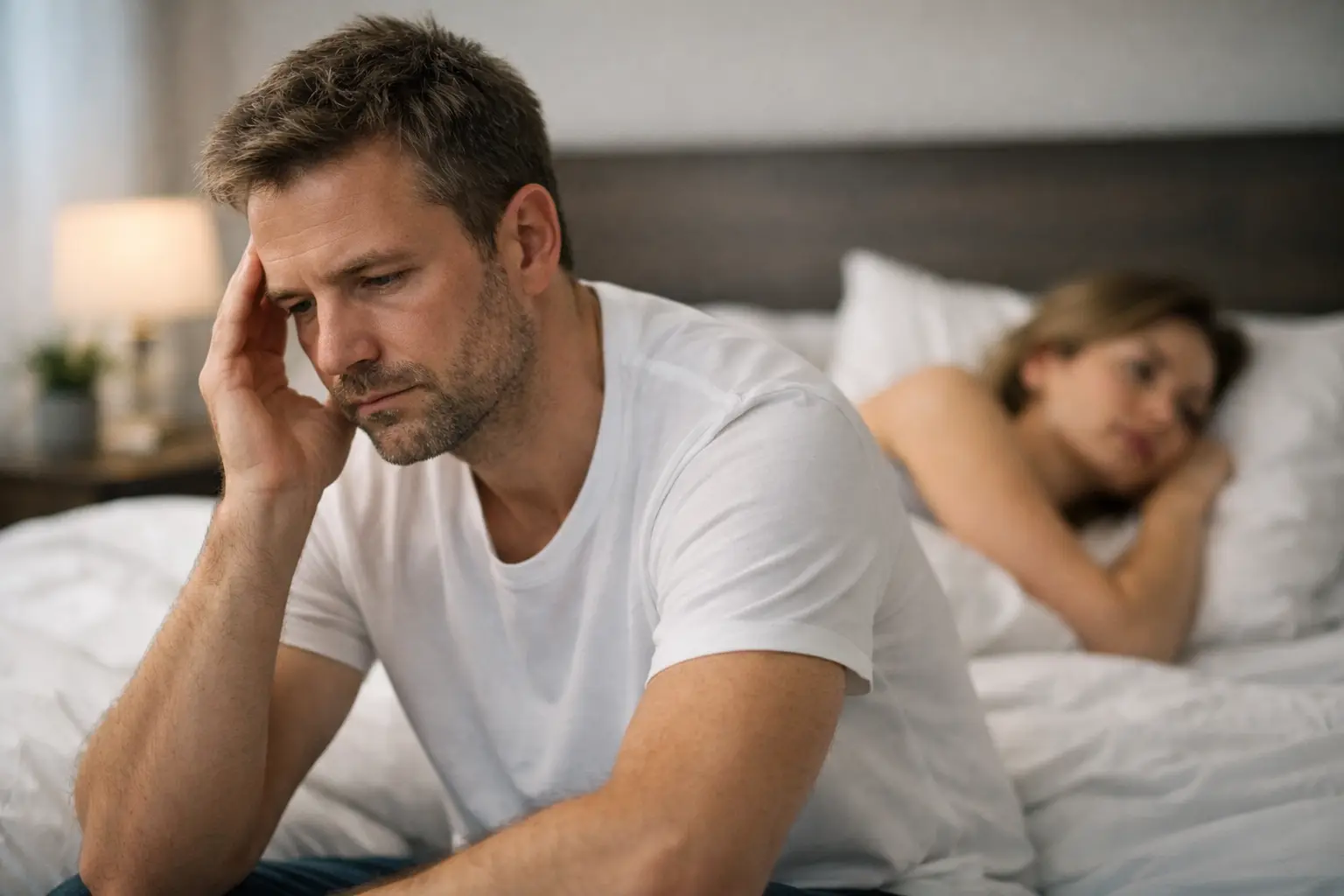
You catch yourself wondering, why do I have low libido, when nothing looks obviously wrong on the outside. You may love your partner, care deeply about your relationship, and still feel far away from desire. That gap can stir shame, grief, confusion, and a painful sense that you have somehow lost a part of yourself.
Low desire is not a moral failing, and it is not proof that your femininity has faded. More often, it is your body, heart, and nervous system telling the truth about what they need.
Why do I have low libido even when I love my partner?
This is one of the most common and tender questions women ask, especially in long-term relationships. Love and libido are connected, but they are not the same thing. You can adore your partner and still feel shut down sexually if your body does not feel safe, rested, emotionally connected, or alive.
Desire is responsive to context. It responds to stress, resentment, hormonal shifts, self-image, touch, pace, emotional safety, and whether sex has become associated with pressure rather than pleasure. For many women over 40, libido is less about a switch being faulty and more about the conditions not being right for arousal to bloom.
That is why forcing yourself, pushing through, or trying to perform your way back to desire rarely works for long. Your body is wiser than that.
Common reasons for low libido in women
There is rarely one single cause. Low libido often grows from a weave of physical, emotional, relational, and psychological factors.
Hormonal changes can shift desire
Perimenopause and menopause can have a real impact. oestrogen and testosterone changes may affect vaginal dryness, sensitivity, energy, mood, and spontaneous desire. Sleep may become lighter. You may feel less resourced in your body, and sex can start to feel effortful instead of nourishing.
This does not mean your erotic life is over. It means your body may need a new kind of listening. The sex that worked in your thirties may not be the sex that serves you now.
Stress and mental load can flatten arousal
Many women are carrying an extraordinary amount. Work, family, ageing parents, relationship tensions, household responsibilities, and the invisible labour of keeping life running all take energy. Desire does not tend to flourish when your nervous system is braced and your mind is racing through tomorrow’s list.
When a woman is constantly in doing mode, it becomes hard to drop into receiving. And erotic energy often asks for presence, spaciousness, and enough internal quiet to feel sensation.
Emotional disconnection affects sexual openness
If there has been criticism, unresolved conflict, betrayal, or years of feeling unseen, the body often protects itself. You may want connection in theory, yet tense up in practice. This is especially true when intimacy has become a place where old hurts get activated.
Emotionally Focused Therapy has shown us that relationship distress can strongly affect sexual desire. When your heart does not feel met, your body may not feel ready to open.
Pain, discomfort, or negative sexual experiences matter
If sex has been painful, rushed, obligation-based, or centred around someone else’s needs, your body may understandably stop anticipating it with pleasure. Instead, it may brace, numb, or disconnect.
Past trauma can also shape libido in profound ways. Sometimes the impact is obvious. Sometimes it is subtle and shows up as avoiding touch, going blank during sex, or feeling detached from your body. These responses are intelligent adaptations, not signs of failure.
Body image and self-criticism can silence desire
It is hard to feel radiant and available to pleasure when your inner voice is harsh. Many women look in the mirror and only see what has changed, sagged, widened, or aged. That inner criticism pulls you away from sensation and into self-monitoring.
Desire needs room to breathe. It needs you inside your body, not standing outside it judging.
Medication and health conditions may play a role
Antidepressants, some contraceptives, chronic pain, thyroid issues, fatigue, depression, anxiety, and other health conditions can all affect libido. If your desire has changed significantly, it is worth considering the medical picture alongside the emotional and relational one.
Why do I have low libido now when I did not before?
Because desire is not fixed. It changes across seasons of life.
A woman may have felt sexually confident for years and then suddenly feel disconnected during perimenopause. Another may notice desire fading after children, burnout, grief, or betrayal. Someone else may realise she was once running on novelty, pursuit, and people-pleasing rather than genuine embodied desire.
This can be confronting, but it can also be an invitation. Sometimes low libido is not just a loss. Sometimes it is the moment your body stops agreeing to sex that is too fast, too performative, too disconnected, or too far from your truth.
What helps rebuild libido?
Not every solution will fit every woman. This is where gentleness matters.
Start by becoming curious rather than critical. Instead of asking, what is wrong with me, ask, what is my body trying to tell me? That shift alone can soften shame and create space for real change.
It can also help to slow right down. If sex has become goal-driven, your body may need a season of touch without pressure. This might mean taking intercourse off the table for a while and exploring affectionate, sensual, or playful connection that does not demand a particular outcome. When there is less pressure to perform, many women begin to feel more again.
Emotional honesty matters too. If resentment, hurt, or distance are present, libido work without relationship repair often feels incomplete. Heart-melting intimacy grows when both partners are willing to speak vulnerably, listen well, and create safety together.
For some women, practical support is essential. That may include a medical review for hormones or pain, pelvic health support, trauma-informed therapy, or couples therapy focused on emotional connection and sexual healing. There is wisdom in getting support. You do not have to work all of this out alone.
Small practices that can help you reconnect
Begin outside the bedroom. Libido is not only about what happens during sex. It is shaped by how connected you feel to your own aliveness.
Give yourself moments of embodied attention during the day. Place a hand on your heart and lower belly and breathe. Notice what feels numb, tense, warm, or awake. Let your body matter before desire appears.
Create small pockets of pleasure that are not sexual performance. A warm bath, beautiful fabric on your skin, music that stirs your hips, stepping into sunlight, fresh flowers by your bed. These moments may seem simple, but they help restore your connection to sensation, beauty, and receiving.
Speak more honestly with your partner. You do not need a perfect script. You can simply say, I want to feel closer to you, and I think my body needs less pressure and more tenderness. That kind of truth can change the atmosphere between you.
And if you notice fear, shutdown, or grief arising, go gently. Libido does not usually return through force. It responds to safety, attunement, and care.
When to seek support for low libido
If low desire is causing distress, affecting your relationship, linked to pain, or leaving you feeling lost in yourself, support can be deeply valuable. A trauma-informed sex therapist or couples therapist can help you understand the layers involved and create a path forward that honours both your emotional world and your body.
This is especially important if there has been sexual pain, trauma, betrayal, or ongoing conflict. These experiences can live in the body and relationship in ways that self-help alone may not fully reach.
At Sexual Empowerment For Women, this work is approached with compassion, therapeutic depth, and reverence for the wisdom of your body. Not to fix you, but to help you come home to your beauty, power and magic.
Low libido can feel lonely, but it can also be the beginning of a more truthful relationship with yourself. Your desire may not return by going backwards. It may return by meeting the woman you are now, with her changing body, tender heart, and deep longing for connection that feels real.