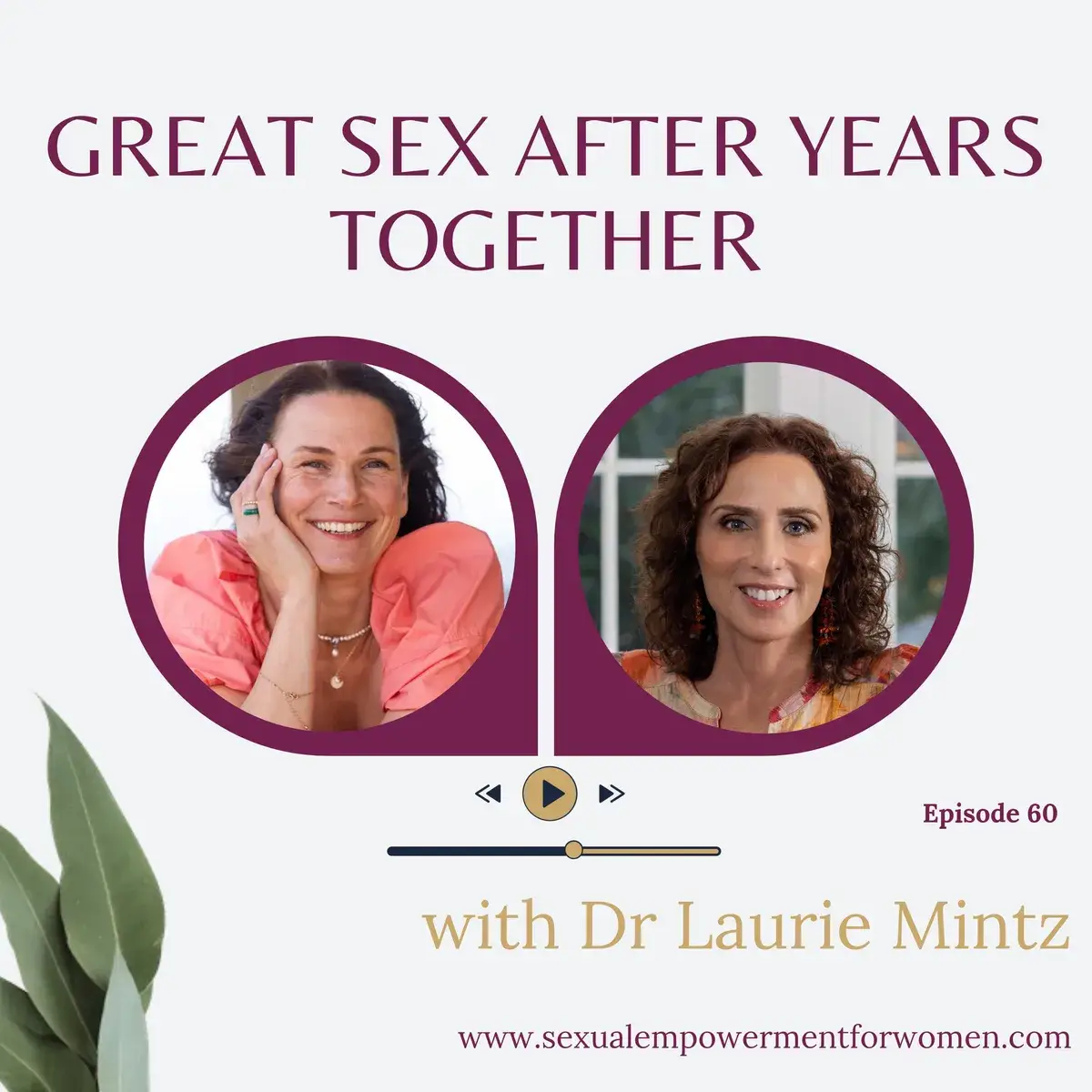
Do you love your partner but don’t feel like having sex anymore? Maybe you’re so tired by the end of the day that you crawl into bed and only want to sleep. Dr Laurie Mintz is 66, she’s been married for about 45 years, and she says she and her husband have great sex, by doing all the things she tells her clients. In this episode she shares how to get desire back after years together, and why you don’t have to feel horny first.
Watch the Episode
“I Don’t Want Sex Anymore”: Where Do You Start?
When a woman tells Laurie she doesn’t want sex anymore, the first thing she asks is what that means. Around 90% of the women she works with say one of two things. They’re exhausted, balancing too much, and when they get into bed they want to sleep. And they miss feeling horny.
So the first step is the tiredness. Many of us were taught to push through stress as if it shouldn’t touch us, but stress changes us biologically, through cortisol and our adrenal glands, and it makes our body less responsive to sexual cues. Very often, Laurie says, the exhaustion comes from a partner who isn’t doing their fair share of the housework and the children. Bringing your partner into that conversation, and giving yourself room to rest, is part of getting your desire back.
Responsive Desire: Touch Comes Before Desire
We grow up being told we need to feel horny before we have sex. That works when we’re young, and it’s a model that fits many men. As we get older, many of us lose that spontaneous feeling, but it doesn’t mean we can’t have a wonderful time in bed.
How many times have you said to yourself, “That was so good once it got going, I should do it more often,” and then you don’t? That’s responsive desire. You like sex, it relaxes you, it feels good and it brings you closer, but it didn’t start with desire. Laurie’s invitation is to stop waiting to feel horny, and to have the kind of sex you want, at a time that’s good for you. The touch comes first, and the desire follows.
If this sounds familiar, you may also like Having Sex Out of Obligation? Why It Happens and What Helps.
Not Horny, or Not in Love Anymore?
I asked Laurie about the women I see who, after 20 or 30 years, start to wonder if they’re even in love with their partner anymore. She says these are two very different questions. A woman who says “I love my partner so much, but I don’t want sex” is usually dealing with responsive desire, tiredness or routine, and that is very recoverable with novelty, fun and exploration. A woman who says “I’m not sure I even like this person anymore” needs relationship counselling first, because none of us want sex with someone we don’t feel love for.
Great Sex After 45 Years: The Three Things Laurie Does
Laurie says the biggest myth is that sex shouldn’t take effort, and that it should feel the way it did at 18, before kids, jobs, sick parents and everything else. She points to research by Peggy Kleinplatz on people with magnificent sex, which found that for many, their best sex started at age 50.
Here’s what she and her husband do, all of it backed by research:
- They talk about sex. Not only in bed, but at the kitchen table, on a walk, in the car. Couples who talk about sex have better sex. Question card decks make it easier to start.
- They try new things. Most couples have a routine because it works, but even a good routine gets boring. Some new things are flops and they laugh about them, and some become favourites.
- They keep a weekly tryst. A set time every week with no phones, no TV and no news, only the two of them, to connect, have sex and stay close afterwards.
People often tell her scheduling sex sounds unromantic. Laurie sees it the other way. In a full life, very little happens unless it goes in the calendar, and saying “this is our time” is a way of saying you matter to me. And when their time stopped working for her, they talked about it and moved it.
For more ideas, read How to Keep Passion Alive in Marriage (Without Changing Partners).
How to Ask for What You Want Without Your Partner Feeling Criticized
So many women tell me the same story. She says “I’d love you to touch me slower,” her partner hears that they weren’t good enough and pulls away, and eventually she stops saying anything at all.
Laurie suggests trying a different way in, a conversation about the conversation. Something like: “I’ve been trying to talk to you about our sex life, and I get the feeling you feel criticized when I do. I want to tell you what I want, not because I’m criticizing you, but because I love you and I want to have good sex with you.”
Then own your needs with “I want” and “I would like”, never “you don’t” or “you always”. Nobody wants to hear “you, you, you”. And if you still can’t have the conversation together, it’s a good time to see a sex therapist. Please don’t give up, keep stepping in and find a new way to the conversation.
Menopause and Desire: What’s Really Going On
In perimenopause, estrogen goes up and down wildly, which is why so many women feel more anxious or low in those years. As estrogen drops, two things can happen: hot flashes, night sweats and 2am wake ups, and the genitourinary syndrome of menopause, which means dryness, itching and painful sex.
Laurie says the second one doesn’t go away on its own, it gets worse if it’s left untreated. And if sex hurts, of course you won’t want it, so sometimes “I don’t want sex because of menopause” is really “sex is painful”. She talks about vaginal estrogen, long lasting moisturisers and a good silicone lubricant, and about testosterone, which slowly decreases from around age 20 and plays a part in feeling horny.
I’m not a doctor, and neither is this post medical advice. Please talk with your GP or doctor about any hormone treatment, including vaginal estrogen and testosterone, and what’s right for you.
You can read more in Loss of Libido in Perimenopause: Why It’s Not Only Your Hormones.
The Orgasm Gap Is Cultural, Not Biological
The orgasm gap is the consistent finding that when women and men have sex together, women have fewer orgasms. Laurie says that isn’t biology, it’s culture. We’re taught that sex means penetration and that foreplay is what comes before, yet only around 4% of women say penetration alone is their most reliable way to orgasm. So if you don’t orgasm from penetration, you’re completely normal, and clitoral touch deserves an equal place.
Pursue Your Orgasm, Without the Pressure
Not every time has to end in orgasm, and none of us should feel pressured. But Laurie believes women should pursue their own orgasms, because research shows men do and women often don’t. Pursuit means making your own pleasure important and focusing fully on your sensations, and if it doesn’t happen, you still had fun. Pressure is “What’s wrong with me?”
For me, connection and pleasure are the heart of it, and when orgasm comes, it’s beautiful. Laurie agrees. When she asked people to describe their sex in detail for her new book, many women were unhappy because they’d given up on their own pleasure, often because they felt ashamed of how they needed to be touched.
You Deserve Pleasure
Laurie’s last message to you: you deserve rest, and you deserve pleasure, in the bedroom and outside it. You aren’t there only to make someone else happy. Find out what you need, and get your pleasure needs met.
Frequently Asked Questions
What is responsive desire?
It’s desire that shows up after touch begins, rather than before. Many women, especially later in life, don’t feel spontaneously horny but enjoy sex once it starts. Waiting to feel desire first can mean waiting forever.
Can you have great sex after decades together?
Yes. Research on people with magnificent sex found that for many, their best sex started at 50. Laurie’s three keys are talking about sex, trying new things and keeping a weekly time for each other.
How do I tell my partner what I want in bed without hurting them?
Start by explaining why you’re bringing it up: because you love them and want good sex together. Then use “I want” and “I would like” statements instead of “you don’t”.
Is it normal not to orgasm from penetration?
Yes. Only around 4% of women say penetration alone is their most reliable way to orgasm. Most women need clitoral stimulation.
About Dr Laurie Mintz
Dr Laurie Mintz is a psychologist, certified sex therapist and Emeritus Professor at the University of Florida, where she teaches the Psychology of Human Sexuality. She’s the author of A Tired Woman’s Guide to Passionate Sex and Becoming Cliterate, and her TEDx talk, A New Revolution for Orgasm Equality, has over two million views. Her new book, Pursue Your Pleasure, comes out with HarperCollins on 8 June 2027. Find her at drlauriemintz.com, on Instagram at @drlauriemintz, and on the Insight Timer app.
Ready to Feel Desire Again?
If something in this episode landed, start with the free five day challenge, Decode Your Sexual Desire, or take the free Sexual Desire Blueprint quiz to see where you’re starting from.
With a big warm hug,
Tarisha