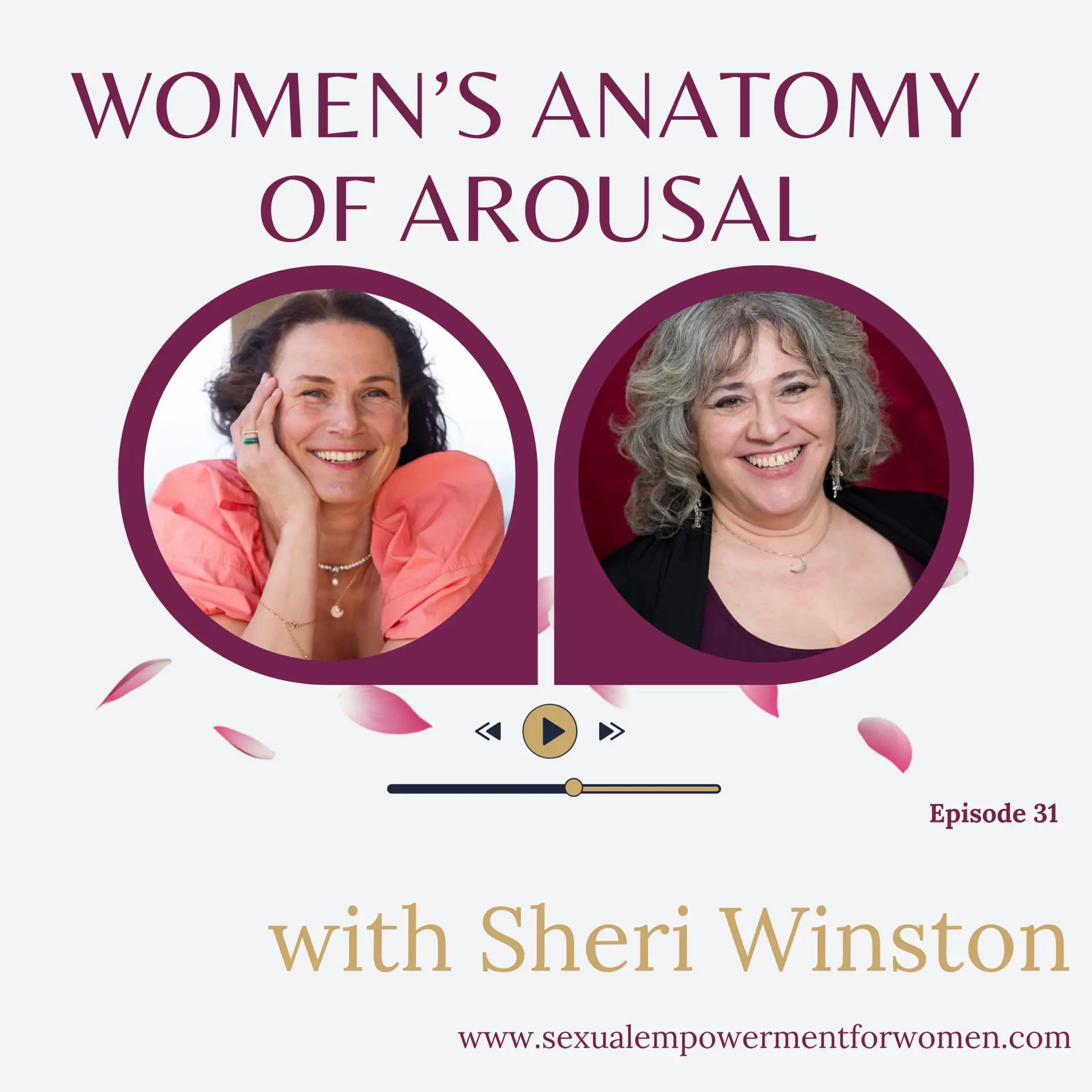
Most of us grew up learning almost nothing about how our own bodies actually work. We got a diagram of the reproductive system and not one honest word about pleasure. In this episode of the Sexual Empowerment for Women podcast, sexuality educator Sheri Winston, author of Women’s Anatomy of Arousal and a former nurse and midwife, walks us through the real anatomy of arousal, and why understanding it changes everything about your desire.
Prefer to listen? The audio version is right here.
You were never taught how your body really works
Here’s what struck me talking to Sheri. So many of us are walking around in bodies we were never given the manual for. We can name every part of a plant cell from school, but when it comes to our own pleasure, we were handed shame and a whole lot of silence.
That’s not your fault, and it’s not too late to learn. When you finally understand how your arousal works, a lot of the frustration you’ve been carrying starts to make sense.
Arousal is a state, not a switch
One of the biggest reframes Sheri offers is that arousal isn’t an on-off button. It’s a state of consciousness, something you move into, the way you’d ease into warm water rather than flick a light.
So if you’ve ever felt broken because you don’t go from zero to ready in thirty seconds, you’re not broken at all. You’re a woman, and your body builds. It wants time, safety, and a reason to trust that it’s welcome.
The anatomy of arousal is bigger than you were told
Here’s the part that genuinely surprises women. The visible bit is a tiny fraction of the whole. Your erectile network runs far deeper and wider than the diagram in your old biology book, and it’s built for pleasure, not just reproduction.
This is why accurate knowledge matters so much. When you actually know how your body is built, you stop chasing someone else’s script and start following your own map. If you want a plain-language starting point, my guide to female pleasure anatomy for beginners is a good next read. You can also explore Sheri’s own work at the Intimate Arts Center.
Why desire changes, and what that doesn’t mean
Your libido rises and falls. It shifts with stress, with the seasons of a long relationship, with perimenopause and menopause. Sheri is warm and practical about this, and I love her for it.
A slower season doesn’t mean it’s gone, and it doesn’t mean something is wrong with you. Desire is responsive, so it tends to show up when the conditions are right, not on command. If this is where you are, you might find yourself in female sexual response is individual, and yours is normal, or in my piece on how to want sex after 40 and feel alive again.
Pleasure is genuinely good for you
We talked about how rekindling passion in a long relationship isn’t a nice-to-have, it’s a conscious choice with real payoffs. Pleasure lifts your mood, softens stress, and helps you feel alive in your own skin.
So making room for it isn’t indulgent. It’s one of the kindest, most practical things you can do for your health and your relationship.
Curiosity is how you find your way back to each other
The couples who keep their spark alive aren’t luckier than everyone else. They stay curious. They keep asking, keep exploring, and keep treating each other like someone worth discovering all over again.
Your body opens when you feel safe and when you feel wanted. When vulnerability is celebrated instead of rushed, trust grows, and pleasure follows it.
If you’re healing, go at the pace that feels right for you
For anyone carrying old wounds around sex, Sheri is compassionate and clear. Healing isn’t a race, and self-care and honest communication do more than pushing through ever will.
You get to set the pace. You get to say what you need. And you get to build a relationship with your own body that feels like coming home.
Your questions, answered
What is the anatomy of arousal?
It’s the full map of the structures involved in your pleasure, including the large erectile network most of us were never taught about. Understanding it helps you work with your body instead of against it.
Why was I never taught how my own arousal works?
Most sex education focused on reproduction and risk, not pleasure. That gap isn’t a personal failing, and it’s something you can close at any age.
Does arousal change after 40 or through menopause?
Yes, and that’s normal. Desire becomes more responsive, so it asks for more time, safety, and connection, rather than disappearing altogether.
How can I feel more aroused with my partner?
Slow down, get curious, and create the conditions where you feel safe and wanted. Arousal is a state you move into together, not a switch either of you flips.
Want to discover your own unique path to feeling free, sexy, and at home in your body? Start here.