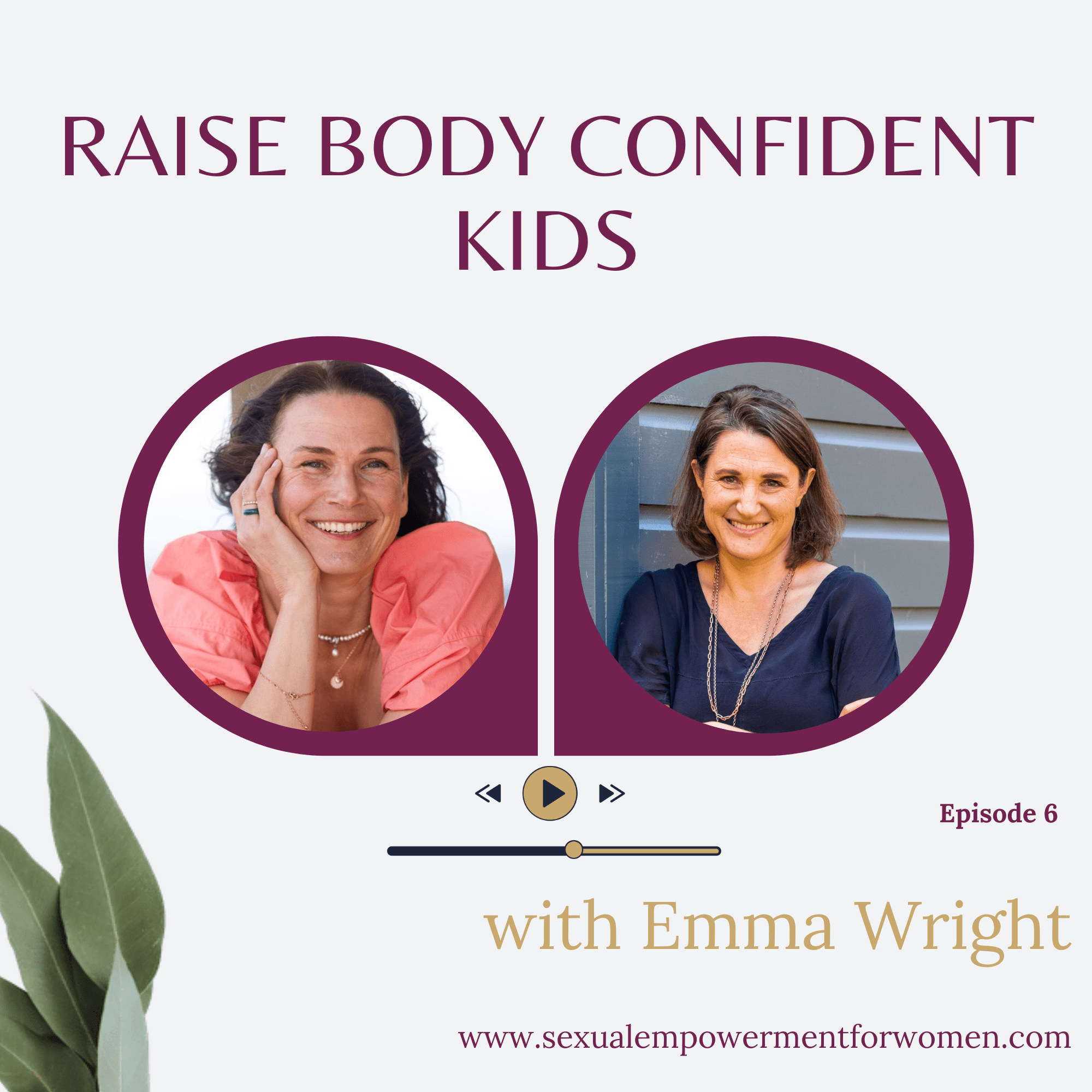
Struggling with mealtimes? Watching your kids shrink away from food or obsess over what they eat? If you have ever wondered how to raise body confident kids without making things worse, you are not alone, and you are not failing.
Body image coach and author Emma Wright joins Tarisha on the Sexual Empowerment for Women podcast to share the strategies that actually work. Not the shame-based, control-driven approach most of us grew up with. Something different. Something that starts with you.
Why Body Confidence in Kids Starts with You
Here is the part nobody talks about. The way your children feel about their bodies is shaped less by what you say and more by what they see you do. If you are skipping meals, criticising your reflection, or constantly trying the next diet, your kids are absorbing all of it.
Emma explains that body confidence for children does not start with policing what they eat. It starts with healing your own relationship with food and your body. The same patterns that show up at the dinner table often echo into how women relate to feeling attractive in their own skin as they get older.
When a mother feels at home in her body, her children feel permission to do the same.
How to Stop Food Struggles Without Creating Shame
Most parents have been taught that their job is to make their kids eat well. Emma turns this on its head. Your job is not to control what your child eats. Your job is to create an environment where food is not loaded with guilt, power struggles, or fear.
In this episode, Emma shares practical strategies you can start using today:
- Stop labelling foods as “good” or “bad.” This creates moral judgement around eating that kids carry into adulthood
- Trust your child’s hunger cues. Kids are born intuitive eaters. They know when they are full and when they need more
- Model a healthy relationship with food by eating with joy and variety, not restriction and guilt
- Talk about what bodies do, not what they look like. Shift the conversation from appearance to capability and aliveness
- Remove the pressure. The more you push, the more resistance you create. Let the table be a place of connection, not conflict
The Link Between Body Image and Eating Disorders
Eating disorders are far more common than most parents realise, and they do not only affect teenagers. The seeds are planted early, in the language we use around food, in the way we talk about weight, and in the dieting culture that surrounds our kids from every angle.
Emma, who is herself an eating disorder survivor, speaks from both professional expertise and lived experience. She wrote her Master’s thesis on how appearance pressure affects female athletes, and she has coached hundreds of parents across Aotearoa and around the world through her Raising Body Confident Kids programme.
This conversation matters for women over 40 especially. Many of us grew up in a culture that taught us our bodies were problems to solve. We dieted. We restricted. We criticised ourselves in the mirror while our daughters watched. Understanding this pattern is a form of sexual empowerment, because when you reclaim your body as yours, not as something to be fixed, everything shifts.
What You Will Learn in This Episode
- Why controlling what your kids eat backfires, and what to do instead
- How your own body image directly shapes your child’s relationship with food
- Practical ways to stop making kids feel guilty or ashamed about eating
- The warning signs of disordered eating and how to create safety around food
- How to raise daughters (and sons) who feel at home in their bodies
About Emma Wright, Body Image Coach
Emma Wright is a certified Health and Body Image Coach based in Aotearoa New Zealand, with training in Trauma-Informed Cognitive Behavioural Coaching and Intuitive Eating. She holds a Master’s degree and is the author of Body Confident: A Guide to Raising Healthy Eaters (HarperCollins NZ).
As an eating disorder survivor and a parent, Emma wanted her own kids to relate to their bodies differently than she did. Through her speaking events, courses, and her Cultivating Body Confidence programme, she has coached hundreds of parents to nurture healthier relationships between their children, food, and their bodies.
Emma has been featured on RNZ, The NZ Herald, Viva Magazine, The Breeze, and The Project.
Connect with Emma: emmawright.co.nz
Frequently Asked Questions
How do I raise a body confident child?
Start by modelling a positive relationship with your own body and food. Avoid labelling foods as good or bad, trust your child’s hunger and fullness cues, and focus conversations on what bodies can do rather than how they look. Children learn body confidence less from what you tell them and more from what they see you practise.
Can my own body image issues affect my kids?
Yes. Research consistently shows that a parent’s relationship with food and body image has a significant impact on their children. If you diet, restrict, or speak negatively about your appearance, your kids absorb those patterns. The good news is that healing your own relationship with your body is one of the most powerful things you can do for your children.
What are the early signs of eating disorders in children?
Watch for sudden changes in eating habits, skipping meals, hiding food, excessive concern about weight or calories, withdrawal from social eating, or extreme rigidity about what they will and will not eat. If you notice these patterns, seek support early. Emma recommends creating a home environment where food is not loaded with shame or moral judgement.
How is body confidence connected to sexual empowerment?
The way you relate to your body affects every part of your life, including intimacy. Women who feel disconnected from their bodies or carry deep shame about how they look often struggle with desire and arousal. Reclaiming body confidence is not vanity. It is the foundation of feeling alive, sensual, and present in your own skin.
Listen to the Full Episode
🎧 Apple Podcasts | Spotify | Amazon Music |
Ready to Come Home to Yourself?
If this episode stirred something in you, take the next step. Start with Sexual Empowerment for Women That Lasts, our flagship guide, or explore the full podcast library at sexualempowermentforwomen.com
With a big warm hug,
Tarisha