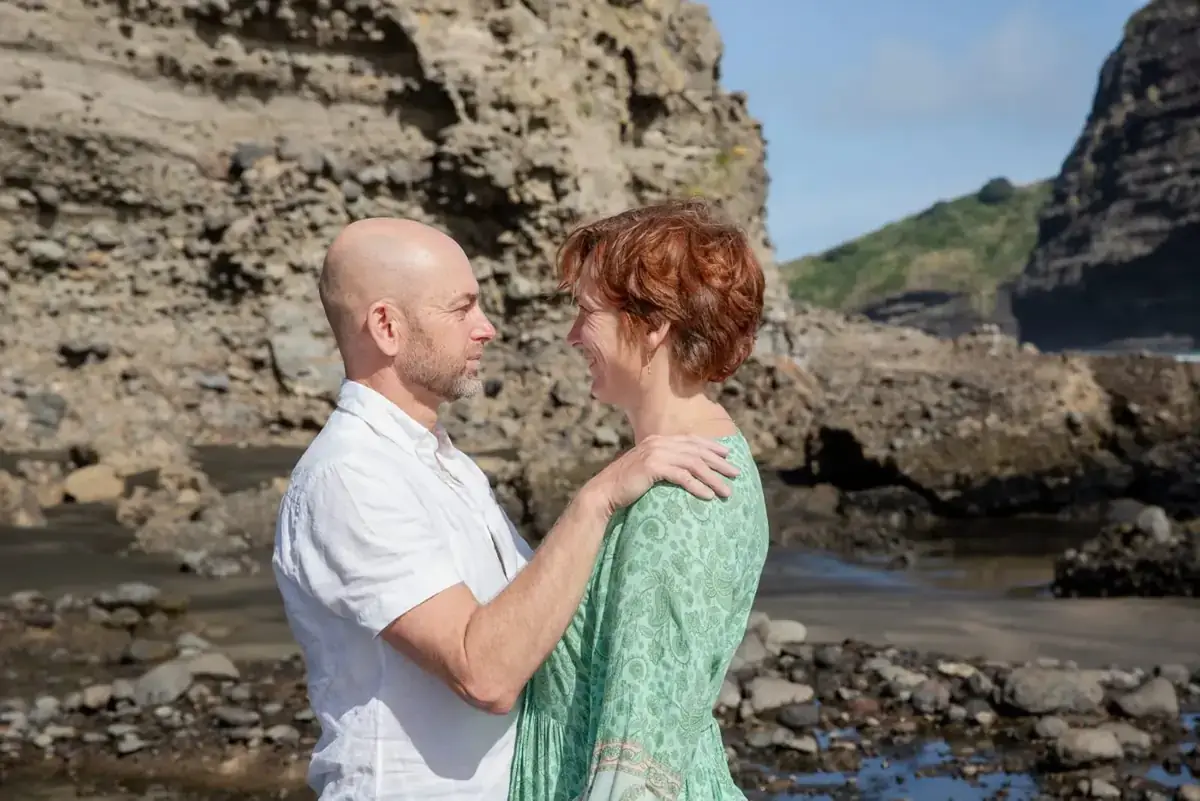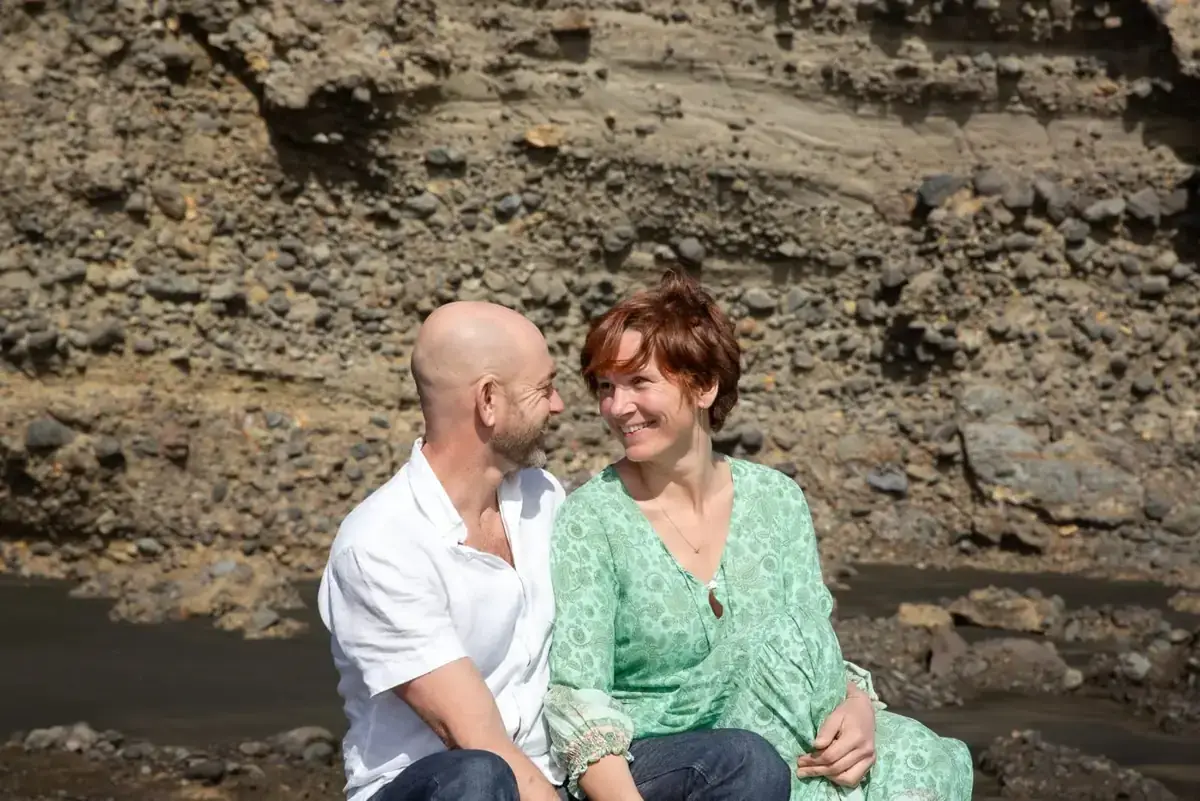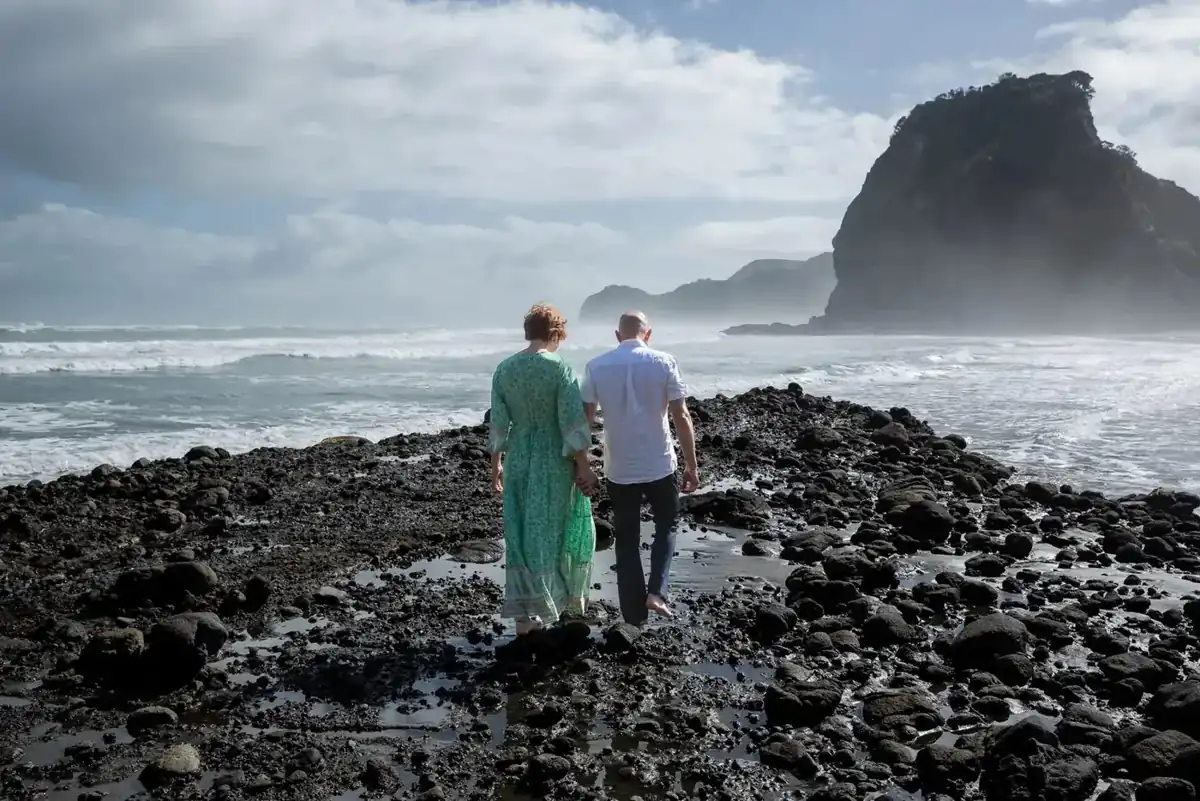
A couples retreat gives you what everyday life doesn’t: time with each other, away from work, children and phones. It’s often where couples feel like lovers again.
This is for you if you and your partner are good together and you miss feeling close. Or if you’ve found love again and you want to do it differently this time.
Why go on a couples retreat?
At home there’s always something else to do. You mean to talk, and then it’s ten o’clock and you’re both tired.
On a couples retreat you step out of all that. You have days, where at home you have minutes.
And you learn together. You both hear the same thing at the same time, so one of you doesn’t have to go home and explain it.
What happens on a couples retreat
Every retreat is different, so I’ll tell you what happens on ours. I lead them with my partner, Mark.
We teach you about the two cycles most couples get caught in, the emotional one and the sexual one. You see your own pattern and you learn how to step out of it.
You learn how desire works for each of you. If that’s where you’re stuck, start with how to get desire back in a long-term relationship.
We also teach polarity, which is how to bring back the attraction between you.
And there’s time for the two of you. You walk, swim, eat well and talk.
What you get from being in a group
Many couples are nervous about the group. Then they tell me it was one of the best parts.
- You stop feeling like the only ones. You see that other loving couples get stuck in the same places.
- You hear your own questions asked. Someone else often asks the thing you didn’t dare to.
- Your partner relaxes. It’s easier to open up when other people are doing it too.
- You learn faster. You see what works for other couples and you try it for yourselves.
- You feel supported. People are cheering for your relationship.
And the work itself stays between the two of you.
Will we have to share in front of everyone?
This is the question I’m asked most.
On our retreats you can share in the group if you want to, and you don’t have to. Most of the work happens between the two of you.
There’s no nudity and nothing sexual happens in the room. We teach practices you can try in private, in your own room.
What the research says about couples retreats
Learning as a couple, in a group, works. Hold Me Tight is a group programme based on emotionally focused therapy. In a study of 95 couples in 16 groups, relationship satisfaction and trust went up during the programme. A Dutch study of the same programme found the same.
It can protect your relationship. In a study with US Army couples, 248 couples did a relationship programme that included a weekend retreat, and 228 couples didn’t. A year later, 2% of the couples who did the programme had divorced, compared with 6% of those who didn’t.
You learn to communicate better. A large analysis of 117 studies found that relationship programmes improve both how couples communicate and how happy they are together.
New experiences bring you closer. In a well-known study, couples who did something new and exciting together felt better about their relationship afterwards than couples who did something ordinary.
That’s why we take you out of your routine, to an island or the mountains, where everything is new.
The research also shows that the good effects can fade if you don’t keep going. So our retreats include a follow-up session afterwards.
How to choose a couples retreat
- Who leads it. Look for a trained couples therapist, not only a lovely venue.
- What they teach. Ask what you’ll learn and what you’ll take home.
- How big the group is. In a small group you get more attention.
- What happens afterwards. A follow-up session helps the changes last.
What if your partner isn’t sure?
That’s very common. One of you is usually keener than the other.
Tell them what it is and what it isn’t. It’s teaching and time together. It isn’t group therapy.
If you find it hard to bring it up, this might help: how to talk about desire without shame or pressure.
What you take home from a couples retreat
A good retreat sends you home with more than a nice memory.
- You understand the pattern you get caught in, and you can name it when it starts.
- You know how to ask for space or reassurance in a way your partner can hear.
- You understand how desire works for each of you.
- You have simple practices to do together at home.
- You have a shared plan for the next chapter of your relationship.
On our retreats you also have a follow-up session afterwards, so you’re not left on your own with it.
Retreat or couples therapy: which comes first?
If you’re in a crisis, or you argue most days, start with couples therapy. A retreat is too much when things are raw.
If you care about each other and you’ve drifted, a couples retreat can be a wonderful place to begin. You get a lot done in a few days, and you enjoy each other while you do it.
Not sure which one you are? We can talk about it on a call.
It doesn’t have to be a group
Some couples love learning alongside other couples. They see they’re not the only ones, and that’s a relief.
Others want complete privacy. For them I offer a private retreat for two, where it’s just the two of you and me for two or three days.
When is a good time to go?
I hear couples say they’ll go when work calms down, or when the kids are older.
Life rarely calms down by itself. If you’ve been thinking about it for a while, that’s usually your sign.
Our next couples retreat
Our next one is the Valentine’s retreat on Kawau Island, from 12 to 15 February 2027. It’s three nights for couples who want to be lovers again.
You might also like how to keep passion alive in marriage while you decide.