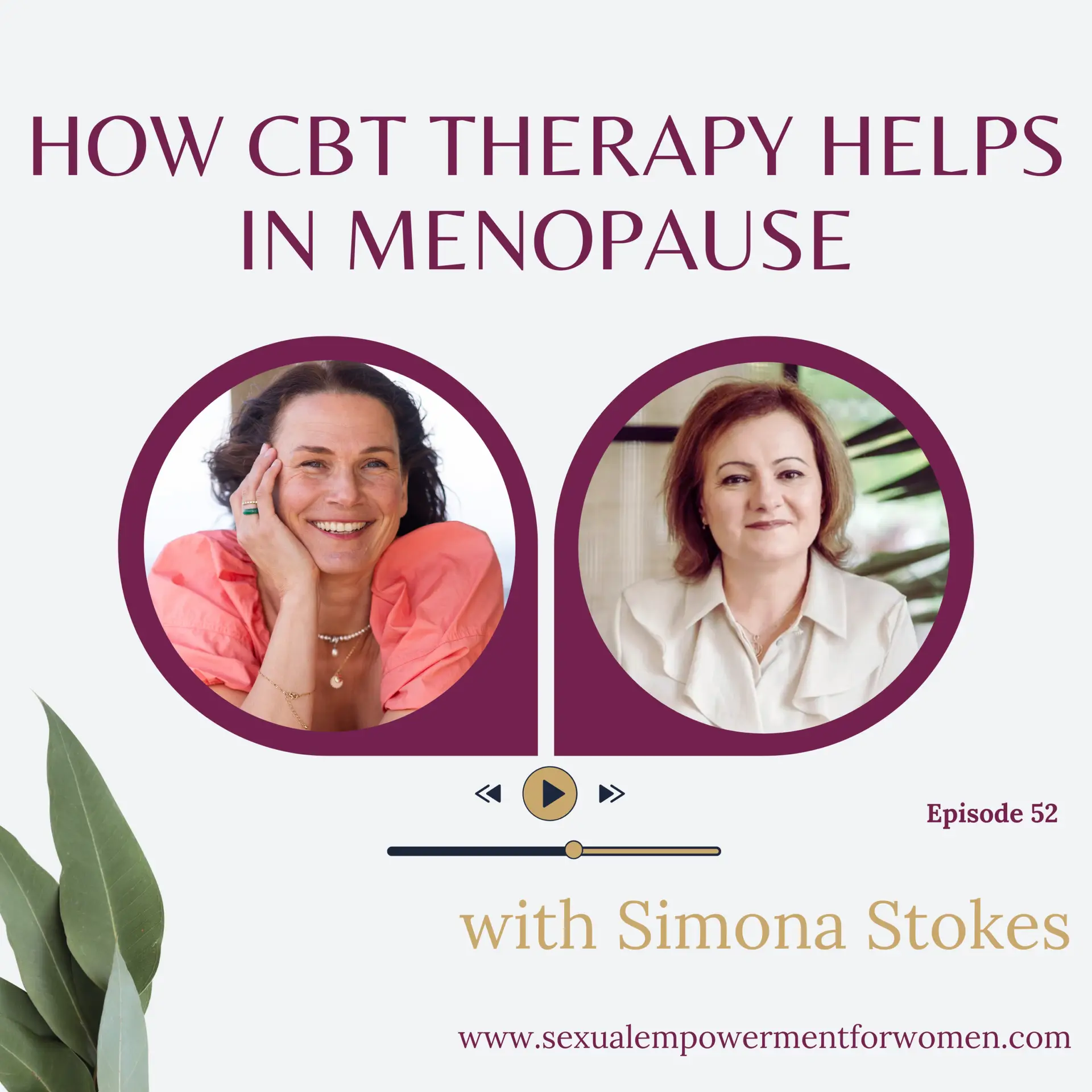
If you’ve lost interest in sex during perimenopause and you still love your partner, you’re not imagining it and you’re not broken. Menopause changes your brain, your body and your libido, and there’s far more you can do about it than you’ve been told.
In this episode of the Sexual Empowerment for Women podcast I talk with Simona Stokes, psychologist, cognitive behavioural therapist and founder of the Menopause CBT Clinic in the UK. We explore the link between menopause and libido, why so many women say they couldn’t care less about sex, and how CBT for menopause helps women move from feeling powerless to feeling in control.
Prefer to listen? The audio version is right here.
Listen and Subscribe
Press play above, or listen wherever you keep your podcasts. Subscribing is the thing that helps other women find this work.
Why Menopause Affects Your Brain, Not Only Your Periods
Simona was 20 years into her career as a psychologist when a client asked her for CBT for menopause. She’d never heard of it. As the woman described her symptoms, Simona had a light bulb moment: this was exactly what she was living through herself, and no one had ever told her about the link between sex hormones and mental health.
Here’s what she found. Your reproductive system is run by your brain, and estrogen is the fuel for the female brain. In perimenopause your ovaries are preparing for retirement. Some days they don’t turn up to work, then they overproduce. That volatile supply unsettles the brain, and because the brain runs your thermostat, your emotions, your memory and your decision making, you can feel it everywhere: hot flashes, anxiety, flat mood, brain fog and that moment of walking into a room and forgetting why.
For many women this transition lasts four to ten years. Around 20% have mild symptoms, 50 to 60% moderate to severe, and around 20% very severe. You can read more about the hormonal side in hormones, menopause and sexuality.
Menopause and Libido: Why the Spark Goes
Estrogen and testosterone both support desire, so it’s very common for women in midlife to lose their libido. Not because they don’t love their partner, and not because they don’t want intimacy, but because the spark has gone. Simona hears it all the time: I couldn’t care less about sex, it’s not on my mind, sometimes I do it to get it over with and keep my partner happy.
There’s a physical side too. As estrogen drops, vaginal tissue can become dry and fragile, and sex can become painful or uncomfortable. Simona explains that local estrogen, applied at genital level, can help keep the tissue moist and more sensitive, and that it’s often an option even for women who can’t use systemic hormone therapy. Talk with your doctor about what’s right for you, and read why sex hurts and the ways forward if pain is part of your story.
It’s Never Only Biology
Simona is clear that sexuality is biological, psychological and social. Many women carry shame about sex from childhood and adolescence. Many believe sex is something for younger people, because that’s all we see on screen. And problems in the relationship have a knock on effect on desire.
This is where my work sits. When women start to practise and pay attention to their sexuality through tantric and embodied practices, they discover hormones weren’t the only influence. They begin to feel the spark again, physically, not only as an idea. If you’d like a place to start, read midlife libido recovery for women over 40.
How CBT Helps With Low Libido in Menopause
Simona’s work starts with education. So many women feel like they’re losing their marbles. Understanding what’s happening biologically puts the mind at rest: I’m not going mad, this is part of the transition.
From there, CBT looks at the thoughts that shape intimacy, like sex is only for young people, or I’ve got my kids, what’s the point. It can work with trauma related to sex, including sexual abuse or a difficult birth. And it helps women rebuild confidence, self-esteem and acceptance of the body they’re living in now. CBT also supports the everyday changes that ease brain fog, like sleep, food, movement, water, alcohol and caffeine, and turns them into habits that last.
Stress Steals Your Sex Hormones
This is Simona’s most hopeful message. When your body is under a lot of stress it prioritises making cortisol, the hormone that helps you push through challenges, and it deprioritises making sex hormones. So low libido in menopause can get worse when life is overwhelming, and managing your stress can help your body produce the hormones it depends on.
A loud inner critic is one of the biggest stressors I see. It’s like having a tiger inside you. When women learn self-compassion and transform that critical voice, desire often comes back too.
The Silence That Pulls Couples Apart
When sex becomes uncomfortable or desire disappears, many women feel ashamed and say nothing. Into that silence each partner makes up a story. Your partner may think, she doesn’t love me anymore, she’s gone off me, and start to withdraw. Then you read that as, my partner isn’t interested in me anymore.
Talking about it can bring you back together. It starts with biology, but it doesn’t have to end in distance. If this sounds familiar, read why women shut down in a sexless marriage.
Small Steps to Take This Week
- Notice your stress load and choose one thing to take off your list
- Speak to your doctor about your symptoms, including vaginal dryness and painful sex
- Write down one belief you hold about sex at your age, and ask whether it’s really true
- Tell your partner what’s happening in your body, so neither of you fills the silence with a story
Frequently Asked Questions
Does menopause affect your libido?
Often, yes. Falling and fluctuating estrogen and testosterone can lower desire, and vaginal dryness can make sex uncomfortable. But psychology, stress and your relationship play a big part too, so there’s a lot you can influence.
Can CBT help with low libido in menopause?
Yes. CBT helps you understand what’s happening, reframe unhelpful beliefs about sex and age, work through trauma, rebuild body confidence and change the habits that make symptoms worse.
Why do I feel like I’m losing my mind in perimenopause?
Estrogen fuels the brain areas that manage mood, memory and focus. When estrogen becomes volatile, anxiety, low mood and brain fog are common. Knowing it’s hormonal is often the first relief.
Can stress lower my sex hormones?
Under chronic stress the body prioritises cortisol over sex hormones. Reducing stress and softening a harsh inner critic can support both your hormones and your desire.
About Simona Stokes
Simona Stokes is a psychologist, cognitive behavioural therapist and certified lifestyle medicine professional with more than 25 years in mental health. In 2020 she founded the Menopause CBT Clinic, an independent psychology service supporting women through the emotional and psychological shifts of perimenopause and menopause. She developed the EMBERS menopause CBT framework and trains health professionals in menopause informed psychological care. Find free resources and book a free 20 minute consultation at menopausecbtclinic.co.uk.
Ready to Come Home to Yourself?
Take the free 60 second quiz and discover your Sexual Desire Blueprint: sexualempowermentforwomen.com/quiz. Or start the free mini-course, Reclaim Your Sexual Confidence.
With a big warm hug,
Tarisha